
Sustainability
More information about sustainability certification
The "a copo" (by the glass) campaign was developed by ViniPortugal with the aim of encouraging the consumption of good wine by the glass nationwide, as a way of promoting Portuguese wines and increasing awareness of the quality and diversity of wines produced in Portugal. See the 64 certified companies HERE
ACCESS THE RESERVED AREA
In the reserved area, you have access to documents and application forms for Sustainability Certification. Contact us via sustentabilidade@viniportugal.pt
The guidelines of the Referencial Nacional de Certificação de Sustentabilidade do Sector Vitivinícola (National Sustainability Certification Reference in the Wine Sector) are:
Simplicity
Explicit benchmark through a simplified and transparent formulation, without prejudice to recommending the continuous improvement model.
Credibility
The benchmark ensures a model of credibility in the light of existing systems and international models in place.
National coverage
A national benchmark, taking into account the specific characteristics of each region where the operator carries out its activities.
Inclusiveness
Inclusive, universal and equitable benchmark, foreseeing its application and accessibility to micro, small, medium and large organizations, as well as organizations with multiregional activities.
“There is little time for corrective action” was a message from the World Commission on Environment and Development: Our Common Future (1988). “While scientists continue to investigate and debate cause and effect, in many cases we know enough to take action. This is true locally and regionally in cases of threats such as: desertification, deforestation, toxic waste and acidification; and it is true globally for threats such as: climate change, depletion of the ozone layer, and species extinction.”
The objectives of the CAP – Common Agricultural Policy reform define the importance of social, economic, and environmental approaches in order to achieve a sustainable agricultural production system. This means that each EAM (Environmental Action Measure), as defined in the CAP Strategic Plan, must reflect these priorities in the design of its programs. In reviewing these National Strategic Plans for the implementation of the CAP, the European Commission will verify their consistency with the objectives of the European Green Deal and monitor progress towards their achievement.
For all these reasons, the definition of sustainability initiatives in the agricultural sector (whether sectoral, regional, or national) is extremely important to ensure the dissemination of practices and to support the differentiation of production in consumer markets. The wine sector, due to its territorial, economic, social, and environmental importance, can lead this “path” and play its role in achieving sustainability goals. The importance of the issue of sustainability, particularly in the wine sector, has led the OIV – International Organisation of Vine and Wine to lead the discussion on the topic and share definitions, concepts, and operational practices within the sector.
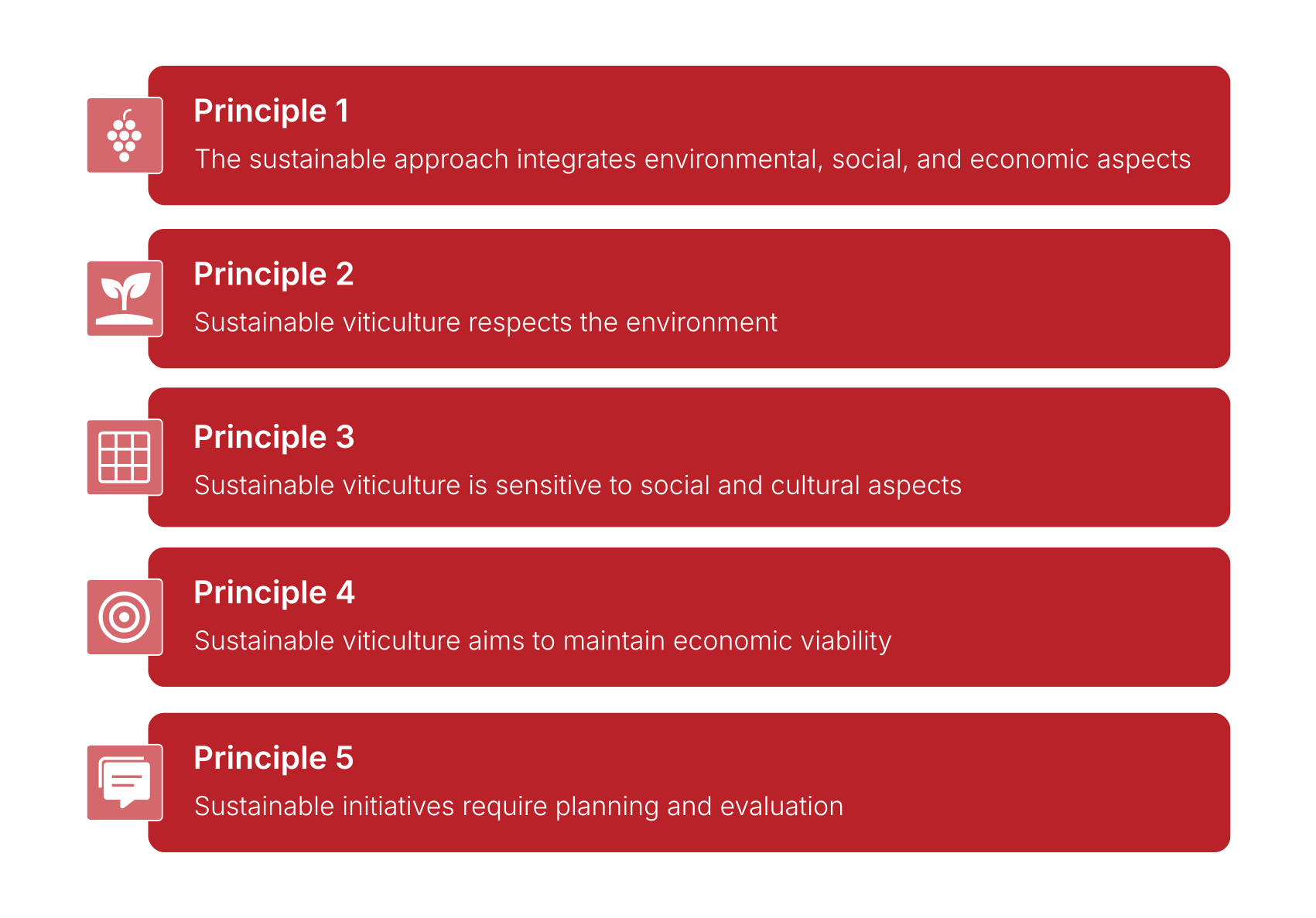
This Reference followed Resolution OIV-VITI 641-2020 (Guide for the Implementation of Sustainable Viticulture Principles), which identifies the main challenges facing the wine sector in adapting its approach to sustainability:
- Maintain a sustainable market in line with society’s expectations, both inside and outside the organization, while maintaining economic and productive competitiveness
- Improving society’s trust in wine companies by implementing a sustainability-based approach
- Develop sustainable viticulture with the aim of preventing negative environmental impacts and adapting to climate change by adapting production practices
The Referencial Nacional de Certificação de Sustentabilidade do Sector Vitivinícola (National Reference Framework for Sustainability Certification in the Wine Sector) thus seeks to promote sustainability among organisations in the sector, of different types of activity, different sizes and with different levels of progress in implementing practices, in a way that is simple, inclusive and credible.
SCOPE, SEGMENTATION AND GENERAL GUIDELINES
Organisations covered
This Reference Framework applies to all responsible and sustainability-oriented organisations in the national wine sector, i.e. those that are focused on creating economic, cultural, social and environmental value, whose practices and results are shared with their stakeholders, and taking into account environmental and social concerns.
The different categories of operators covered by this Reference Framework are: distiller; bottler; wine vinegar producer; preparer; winegrower; winemaker; winemaker-bottler.
Segmentation
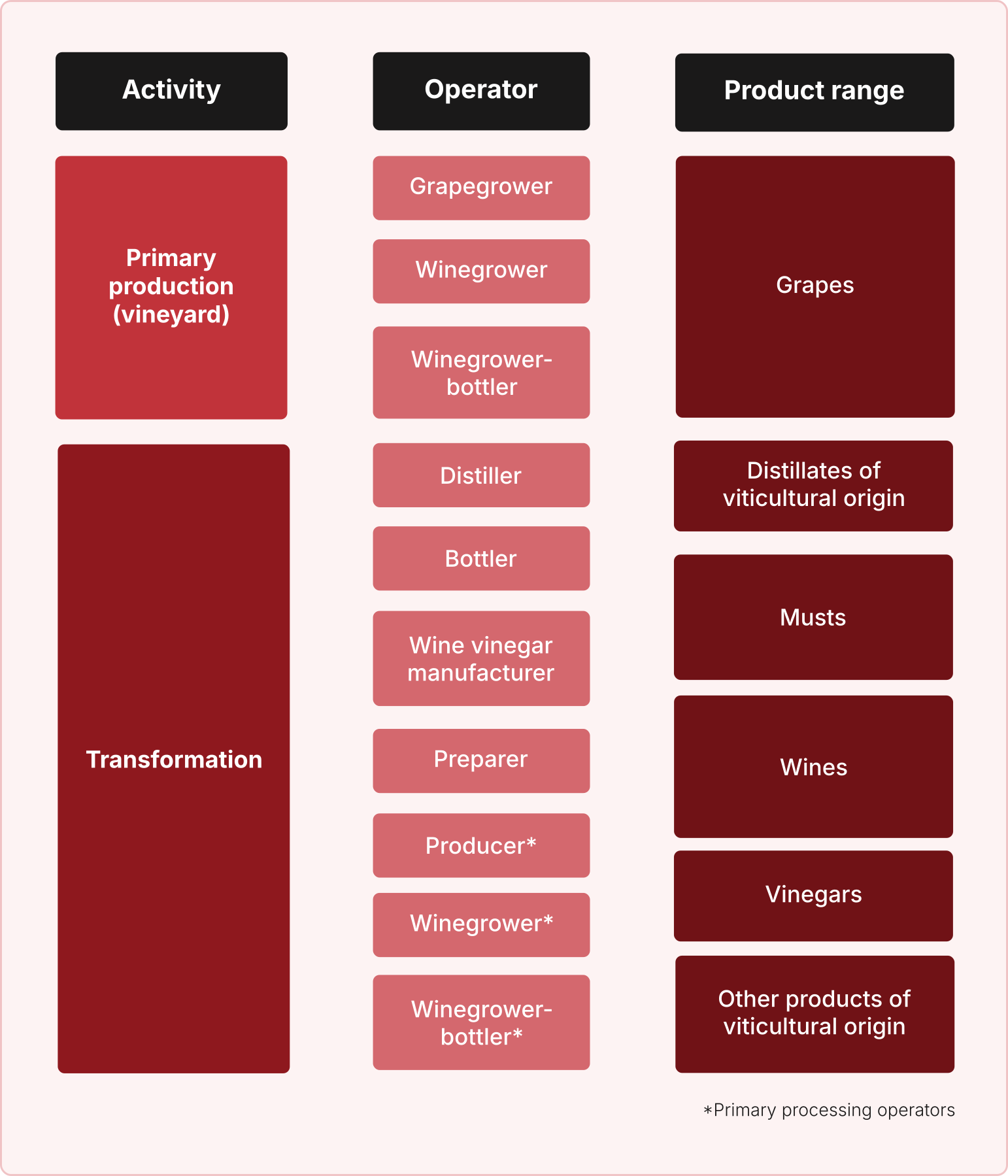
The National Reference Framework for Sustainability Certification in the Wine Sector is adapted to national operators and is a document with universal scope, regardless of the activity and size of the organisations.
In order to facilitate the applicability of the Reference Framework, two types of activities were defined: in this way, and in accordance with the OIV recommendations, the different operators and product families covered are classified (SIVV – Information System of the Vine and Wine Institute).
General guidelines
Organisations wishing to carry out an assessment should begin by understanding the concept of sustainability as defined by the OIV, as well as reading the National Reference Framework for Sustainability Certification in the Wine Sector beforehand.
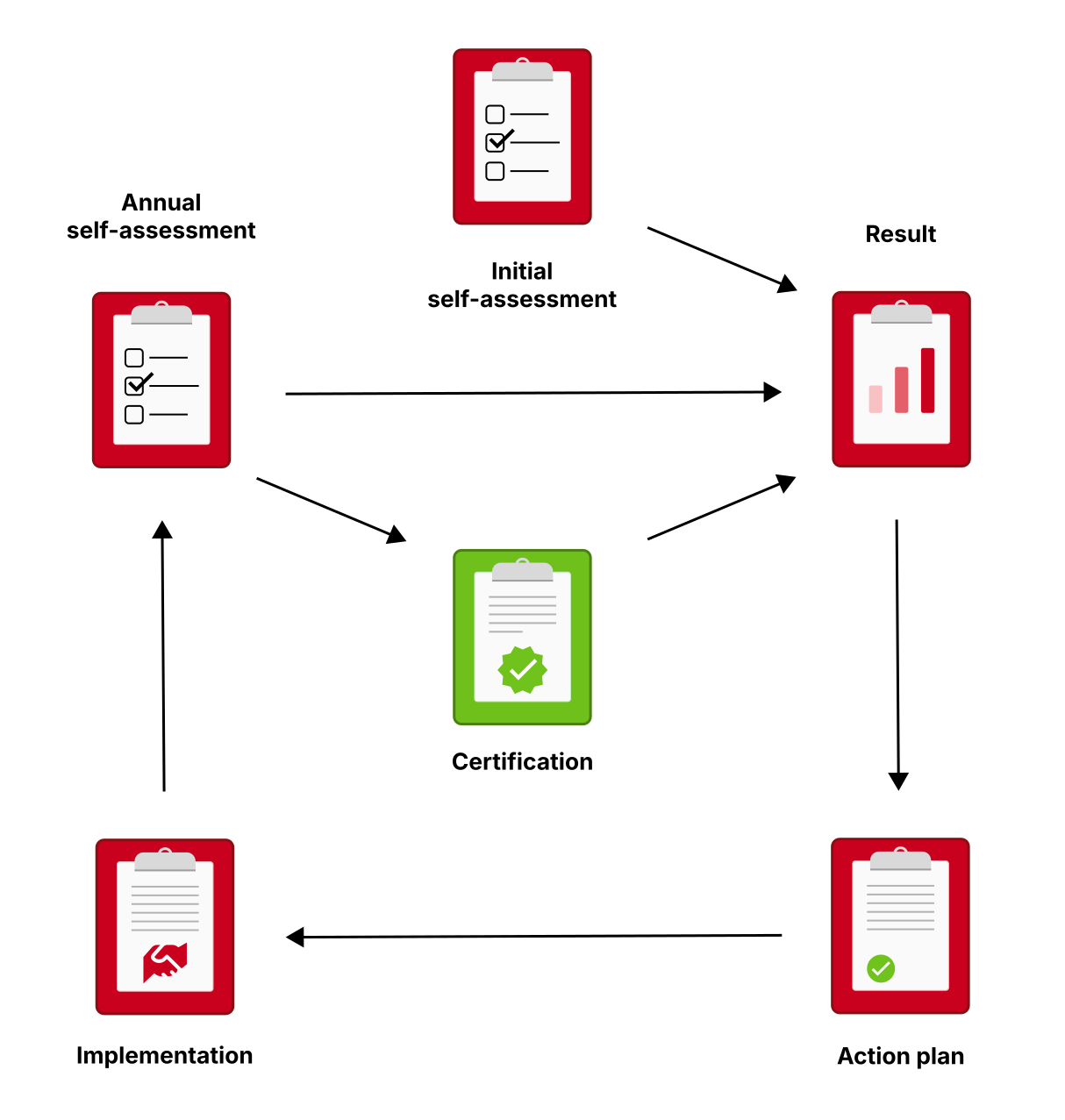
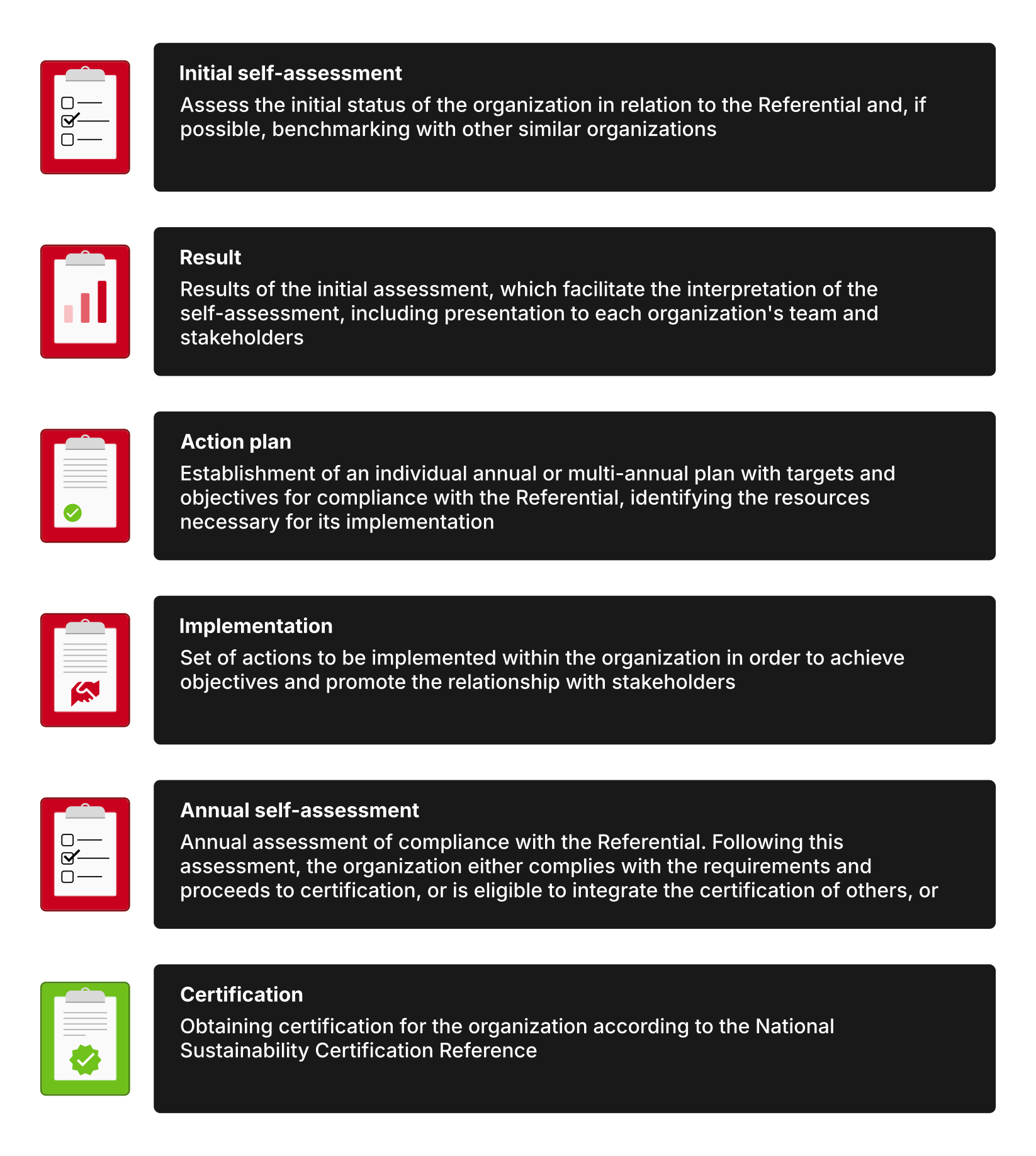
Organisations must carry out their assessment, under the National Reference Framework for Sustainability Certification in the Wine Sector, in relation to the scope of their entire activity in the national territory and not just each of their companies and/or farms.
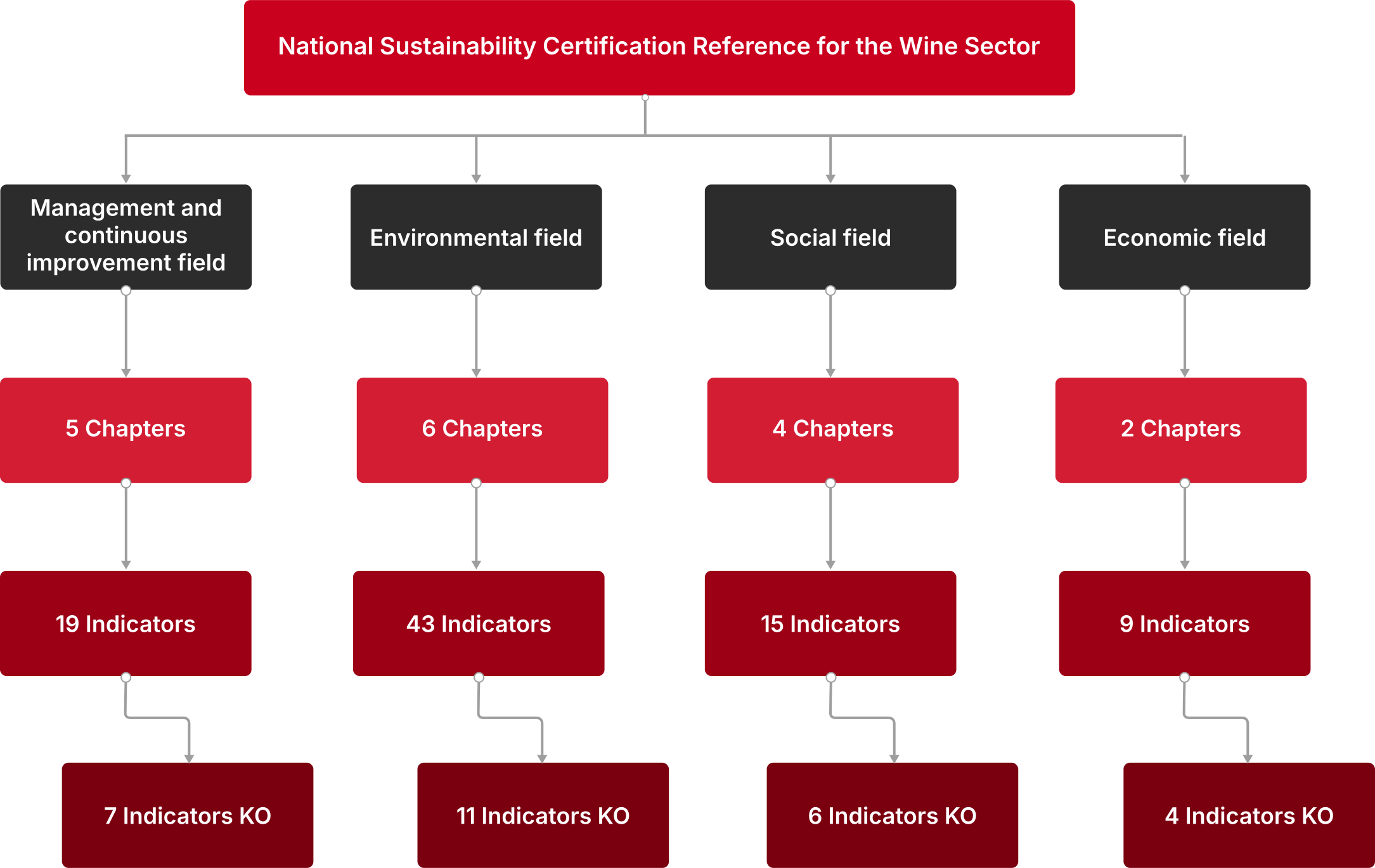
Each operator, based on its activity or activities, will have different numbers of indicators to comply with. Although the Reference Framework has 86 indicators spread across 17 chapters, each operator will only be assessed on those that are relevant to its activity.
DOMAINS, AREAS OF INTERVENTION AND INDICATORS
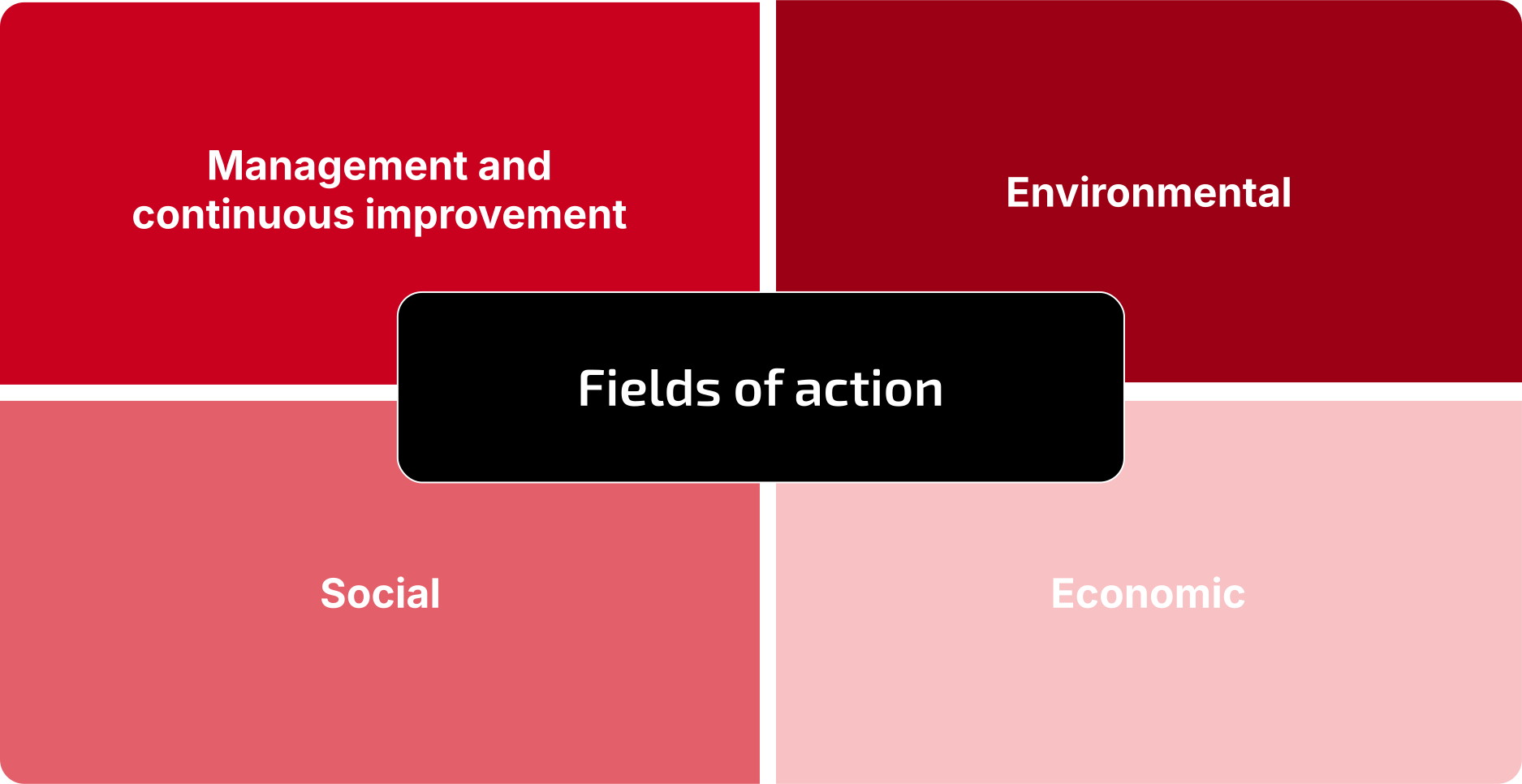
Based on a comparative assessment of the various international initiatives analysed in the Diagnostic Report, and using the OIV resolutions on sustainability for the wine sector as a reference, the Framework was constructed taking into account four key areas of intervention (domains): 1) Management and continuous improvement, 2) Environmental, 3) Social and 4) Economic.
O Referencial Nacional de Certificação de Sustentabilidade do Sector Vitivinícola tem um conjunto de indicadores (86), dos quais 28 são indicadores “KO”, organizados em capítulos (17) e distribuídos pelos quatro domínios de intervenção.
The Referencial Nacional de Certificação de Sustentabilidade do Sector Vitivinícola (National Reference Framework for Sustainability Certification in the Wine Sector) has a set of indicators (86), of which 28 are “KO” indicators, organized into chapters (17) and distributed across the four areas of intervention.
ACCESS THE RESERVED AREA
In the reserved area, you have access to documents and application forms for Sustainability Certification. Contact us via sustentabilidade@viniportugal.pt
CERTIFICATION ENTITIES APPROVED BY VINIPORTUGAL